
How to Keep Your Dog Cool in Summer
If you are trying to keep your dog cool in summer, the place to start is your home. When temperatures rise, your dog has nowhere else to go. If you are struggling in the heat, your dog is likely struggling even more. A house that feels uncomfortably warm to you can feel genuinely dangerous to them.
At Red Van Plumbers, we help homeowners manage indoor temperatures all year round. We also happen to love animals and have dogs in the office. So this guide looks at what you can do to keep your home cooler during hot weather, and how that directly protects your dog during a heatwave.
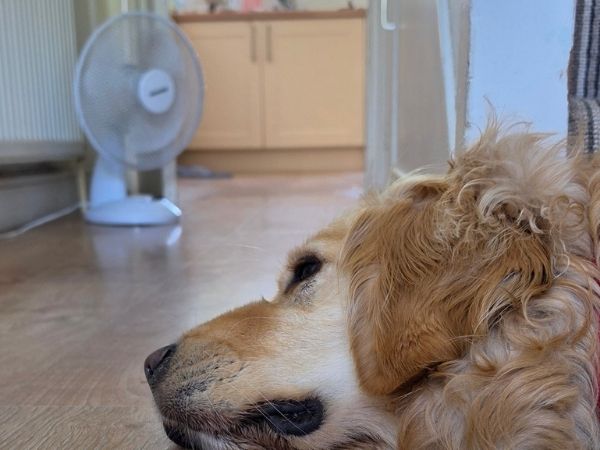
Why a Hot Home Is a Big Risk for Dogs
Dogs cool themselves almost entirely through panting, which becomes less effective as the air around them gets hotter. Even short-haired breeds carry an insulating coat that holds heat in. On a 30-degree day, a dog in a warm, poorly ventilated room is under real physical stress, even if they appear calm. According to the PDSA, heatstroke in dogs can develop within minutes in the wrong environment. A conservatory, a south-facing bedroom, or a poorly ventilated utility room can reach dangerous temperatures on a hot day far faster than most owners realise.
Keeping your home cool is not just a comfort issue for your dog. On the hottest days, it is a safety issue.
What About Heatstroke?
Signs of heatstroke in dogs include heavy panting, excessive drooling, bright red gums, glazed eyes, and weakness or difficulty standing. If you notice any of these signs, move your dog to a cool area immediately, apply cool (not cold) water to their paws and belly, and call your vet straight away. Heatstroke is always a veterinary emergency.
How to Keep Your Home Cool Enough for Your Dog
Most of these steps cost nothing and take seconds. Work through the list and your home will feel noticeably cooler.
Close curtains and blinds before the sun hits the glass.
South and west-facing rooms absorb the most heat during the day. Close the blinds or curtains in these rooms before the morning sun reaches them, not after. Once a room has heated up, fabric at the window does far less work. Getting ahead of the heat is the most effective free step you can take, and your dog will head straight for the shaded room on a hot day.
If possible give your dog access to cool tiled or stone floors.
Dogs instinctively seek out hard, cool surfaces when they are warm. Make sure your dog can get to the kitchen or bathroom floor freely throughout the day. Tiles and stone stay significantly cooler than carpet or wood and provide natural relief without any effort on your part. Do not shut these rooms off during hot weather.
Move your dog’s bed to the ground floor during a heatwave.
Heat rises, and upstairs rooms are consistently warmer than those at ground level, often by several degrees. If your dog normally sleeps or rests upstairs, bring their bed down during hot weather. Ground floor rooms with tiled or stone floors are the coolest spaces in most homes and give your dog the best chance of finding a comfortable temperature without any additional effort.
Swap a stuffed bed for a raised mesh cot or cooling mat.
Traditional padded dog beds trap body heat underneath your dog. A raised mesh cot allows air to circulate under their belly, where dogs lose heat most effectively. If a cot is not practical, a pressure-activated cooling mat is a good alternative. These use a gel layer that draws heat away from the body and resets automatically after a short period of non-use. Place one in your dog’s favourite spot and let them find it.
Use a fan to keep air moving.
A floor fan positioned near your dog’s resting area helps move warm air away from their body. For added effect, place a bowl of iced water in front of the fan. This creates a basic evaporative cooling effect that can lower the room temperature by a few degrees. Do not aim the fan directly at your dog for extended periods, and note that fans work best when the air temperature is below 35°C.
Freeze a water bottle as a cool block.
Fill a large plastic bottle three-quarters full with water and freeze it overnight. Wrap it in a damp towel and place it in your dog’s bed or crate. As it slowly defrosts, it acts as a cool surface your dog can rest against. This works particularly well in a crate or a smaller room where the cold radiates into the surrounding air.
Run kitchen and bathroom extractor fans.
Most homes have extraction fans fitted above the hob or in the bathroom. These pull warm, humid air out of the house and are worth running on hot days, especially after cooking or showering. Both activities push heat and moisture into the air, raising the ambient temperature throughout the home. Turning the extractor on immediately limits that effect.
Avoid using the oven during the hottest part of the day.
A conventional oven raises the temperature of your kitchen significantly and pushes heat through the rest of the house. On hot days, switch to the microwave or take cooking outside with a BBQ. If you do need to use the oven, run the extractor fan throughout and open the kitchen window once outdoor temperatures start to drop in the evening.
Set up multiple water stations with ice.
Dogs need significantly more water in hot weather, and warm water puts them off drinking. Put out several bowls in different rooms, drop a handful of ice cubes in each, and refresh them throughout the day. The more accessible the water, the more your dog will drink. Dehydration makes the heat harder to manage and increases the risk of heatstroke, so this one is not optional.
Try frozen treats to cool from the inside out.
Fill a Kong or a lick mat with dog-safe peanut butter, low-salt broth, or pureed fruit and freeze it the night before. These give your dog something to work on during the hottest part of the day and help lower their core temperature from the inside. They also keep your dog calm and occupied, which reduces the physical exertion that generates extra body heat.
Keep windows closed during the day and open them in the evening.
This is one of the most misunderstood points about managing home temperature in summer. Opening windows when it is hotter outside than in pulls warm air into the house. Keep them closed until outdoor temperatures start to drop, usually from early evening onwards, then open them to let cooler air circulate through. Close them again the following morning before the sun builds heat.
Keep conservatories and loft rooms completely off limits.
Glass-heavy spaces experience a greenhouse effect and can reach extreme temperatures within a very short time on a hot day. This applies to conservatories, garden rooms, south-facing loft conversions, and any room where heat has been building without ventilation. These are not suitable spaces for your dog during a heatwave, even briefly.
Consider a portable air conditioning unit for short-term relief.
If the steps above are not keeping your home cool enough, a portable air conditioning unit is a practical step. They are widely available, require no permanent installation, and can reduce the temperature within a single room.
However, the drawbacks are worth knowing. Most need a hose vented through a window or door gap, which lets some warm air back in at the same time. They are often noisy, use a fair amount of energy, and struggle to maintain comfortable temperatures in larger or poorly insulated rooms. As a short-term measure during a heatwave they are useful, but they are not a long-term solution.
Install a proper air conditioning system for lasting results
A professionally installed air conditioning system is the most effective solution available. It is quieter than any portable unit, significantly more energy efficient, and cools a room reliably without the compromises portable units bring.
You do not need to cool your whole home either. Many homeowners choose to install a single wall-mounted unit in the room that matters most, whether that is a bedroom, a living room, office, or the room their dog spends most of the day in. That one room becomes a reliable cool space for the whole household throughout the summer.
Most modern AC systems also provide heating too. Homeowners benefit from efficient heating in winter as well as cooling in summer. Installation is typically completed in a single day and is far less disruptive than most people think.
Find out more about air conditioning installation or call us on 01628 533 550 to arrange a free, no-obligation consultation. You can also request a quote online at a time that suits you.
Resources
The following sources were used in researching this article. We recommend them as trusted references for further reading.
- PDSA: Beat the Heat: How to Keep Your Dog Cool in Summer
- RSPCA: Keeping Pets Safe in Summer
- Red Van Plumbers: How to Keep Your House Cool in Summer
- Climate Change Committee: A Well-Adapted UK
For a more detailed look at why UK homes are increasingly struggling with summer heat, including the findings of the Climate Change Committee’s recent report, read our article: How to Keep Your House Cool in Summer.