
How to Keep Your House Cool in Summer
UK summers are getting hotter. If your home feels unbearable by mid-morning, you are not alone. Most British homes were built to hold heat in, not keep it out.
This guide explains why that is a problem, who is most at risk, and what you can do right now to make your home more comfortable. We also explain when passive cooling is no longer enough.
Jump to a Section
- Quick Ways to Keep Your House Cool Today
- Why UK Homes Struggle So Much in the Heat
- Who Is Most at Risk from an Overheating Home?
- Which Homes Are Most Likely to Overheat?
- How to Keep Your House Cool During the Day
- How to Cool a Room Without Air Conditioning
- The Hottest Rooms in Your Home
- How to Get a Good Night’s Sleep During a Heatwave
- Staying Safe: Heat Exhaustion and Heatstroke
- Check on Elderly Neighbours and Relatives
- Working from Home in the Heat
- If Your Home Feels Hot, Your Pets Feel It Too
- When Passive Cooling Is No Longer Enough
Quick Ways to Keep Your House Cool Today
Whether your home is already overheating or you want to stay ahead of a hot day, these ten steps will help you keep your house cool in summer. Some cost nothing and take seconds. Others are worth thinking about as a longer-term investment, especially if your home regularly struggles in warm weather.
Close curtains and blinds before rooms heat up.
Do this first thing in the morning on the sunny side of the house. It is one of the most effective free measures available and makes a surprising difference to indoor temperature.
Open doors and windows on the shaded side of the house only.
The side facing away from the sun stays cooler for longer. Check which walls get direct sunlight through the day, then focus on the openings on the opposite side when you want airflow without the heat.
Don’t open doors and windows that are in direct sunlight during the day.
Letting hot air in during peak heat makes things worse. Wait until outdoor temperatures drop, usually after 8pm or later on very hot days, then open them to let cool air circulate.
Avoid using ovens and tumble dryers in the afternoon.
Both generate significant heat inside the home. Cook earlier in the day or use a microwave instead. Your kitchen will stay noticeably cooler as a result.
Stay downstairs where possible.
Heat rises through the building all day. The ground floor is almost always several degrees cooler than upstairs by the evening, so spend time there during the hottest hours.
Switch off electronics and lights you are not using.
Every device left on standby generates heat. Unplug what you can, especially in bedrooms, where accumulated warmth from devices makes sleeping harder.
Use a fan with iced water in front of it.
A bowl of ice placed in front of a fan creates a basic evaporative cooling effect. Fans only work well below 35°C, so combine this method with other steps on very hot days.
Cover bare windows with reflective foil or white paper.
This works well in rooms without curtains or blinds, like offices or spare rooms. Foil reflects heat back outside, while plain paper simply blocks some light. Foil is the better choice if you can spare it.
Drink water regularly, even if you do not feel thirsty.
Staying hydrated helps your body regulate temperature more effectively. Avoid alcohol, which accelerates dehydration and makes the heat harder to manage.
Consider a portable air conditioning unit for short-term relief.
Portable units are widely available and reasonably affordable. They do provide some cooling, but they have real limitations. Most need a hose vented to the outside, they can be noisy, and they cool rooms inefficiently compared to a proper system. They are a reasonable short-term measure, but they are not a lasting solution.
Proper air conditioning system for lasting comfort.
A professionally installed system is far more effective than any portable unit. It is quieter, more energy efficient, and cools rooms properly. Installation is straightforward and typically completed in a day. Most modern systems also act as heat pumps in winter, so you benefit year-round. If your bedroom or home office regularly becomes unusable in summer, this is worth serious consideration.
Find out more about air conditioning installation from Red Van Plumbers.
Check on elderly neighbours and relatives
Older people are at significantly higher risk during hot weather. A quick phone call or a knock on the door could make an enormous difference to someone who lives alone and is struggling with the heat.
Read on for a fuller explanation of each of these points, including specific advice for home workers, guidance on heatstroke, and tips for keeping pets safe in summer.
Why UK Homes Struggle to Stay Cool in Summer
British homes were designed for a cold, wet climate. Most have thick insulation, small windows, and very little in the way of shading or ventilation built for hot weather. In a cold winter, that is exactly what you want. In a 30-degree heatwave, it turns your home into an oven.
In May 2026, the Climate Change Committee published A Well-Adapted UK, one of the most significant climate reports ever produced in this country. According to the report, 92% of existing UK homes could experience dangerous overheating conditions under just 2°C of global warming. The 2022 heatwave caused more than 3,000 heat-related deaths across England and Wales. Without action, annual heat-related deaths could rise to between 3,000 and 10,000 per year by 2050.
Hotter summers are no longer a distant risk. They are already here, and most UK homes are simply not ready for them. Understanding why your home overheats is the first step toward doing something about it.
We recently explored this issue further in our article: Air Conditioning for UK Homes Is No Longer a Luxury.
Who Is Most at Risk from an Overheating Home?
Not everyone feels the heat equally. Some people face a genuine health risk when indoor temperatures rise, and it is worth knowing whether you or someone you care about falls into one of these groups.
According to the UK Health Security Agency, the people most vulnerable to heat-related illness include those aged 65 and over, people with long-term health conditions such as heart or lung problems, people who live alone, pregnant women, and people who are at home during the hottest part of the day.
That last point matters more than many people realise. If you work from home and don’t have air con, you are likely in a higher-risk group. On a 33-degree day, sitting at a desk in a south-facing upstairs room can quickly become a serious problem, not just an uncomfortable one.
Older people deserve a specific mention here. As Age UK explains, the body’s ability to regulate temperature declines with age. Conditions affecting the heart or lungs become harder to manage when indoor temperatures rise. Many older people are also less likely to recognise the early signs of heat exhaustion in themselves. If you have an elderly relative or neighbour who lives alone, checking on them during a heatwave is one of the most important things you can do.
Which Homes Are Most Likely to Overheat?
Some properties are more prone to overheating than others. Top-floor flats are particularly vulnerable because heat rises. Homes with windows on only one side struggle because there is no cross-ventilation. Properties with large south or west-facing windows, or those in densely built urban areas with little green space, also tend to heat up more quickly.
Highly insulated or energy-efficient homes can trap heat inside during summer, even though that insulation is an asset in winter. If your home ticks several of these boxes, staying cool in summer requires a more proactive approach to managing heat during warm weather.
How to Keep Your House Cool During the Day
The most effective way to keep your house cool in summer costs nothing. Close your curtains and blinds on the sunny side of the house before the heat builds in the morning, and keep windows closed while it is hotter outside than in. This traps cooler air inside and blocks radiant heat from the sun.
The GOV.UK Beat the Heat guidance recommends these steps during hot weather:
- Shade or cover windows on the sunny side of your home
- Open windows only when the outside air is cooler, typically in the early morning and evening
- Turn off lights and unused electrical equipment, as these generate heat
- Cook at cooler times of day, or use a microwave rather than the oven
- Check that your heating system is switched off completely
- Move to the coolest room in the house, especially for sleeping
Getting Your Timing Right
Timing matters more than most people realise. Many people open windows during the hottest part of the day, which pulls hot air in rather than letting cool air circulate. Open windows at night instead, when outdoor temperatures drop. Then close them again before the sun builds heat the following morning. This simple routine can keep your home significantly cooler throughout a heatwave without costing anything.
How to Cool a Room Without Air Conditioning
If you do not have air conditioning, fans are your best tool for keeping cool in summer. However, there is an important caveat. GOV.UK guidance states that fans are effective only when the air temperature is below 35°C. Above that threshold, a fan can actually accelerate dehydration by blowing warm air across your skin without cooling it.
If you are using a fan, place a bowl of iced water in front of it. This creates a basic evaporative cooling effect and can make a noticeable difference in a single room. Do not aim the fan directly at your body for long periods.
Some other practical steps that help keep rooms cooler:
- Dampen a towel with cool water and place it on your neck or forehead
- Avoid hot showers, as steam heats the bathroom and surrounding rooms
- Take cool or lukewarm showers instead, which lower your body temperature directly
- Stay on the ground floor where possible, as heat rises through the building
- Unplug electrical devices you are not using, including anything left on standby
The Red Cross also advises avoiding alcohol during hot weather. Alcohol causes dehydration, which is already harder to manage when your body is working to stay cool. Light meals with high water content, such as salads, cucumber, and fruit, also help to maintain hydration throughout the day.
The Hottest Rooms in Your Home and What to Do About Them
Upstairs bedrooms are almost always the worst affected during a heatwave. Heat rises through the building all day, and by evening an upstairs room can be several degrees hotter than the ground floor. Many people cope reasonably well during the daytime but struggle once bedrooms stay hot overnight. If you have the option to sleep downstairs during very hot periods, it is worth doing.
South-facing and west-facing rooms receive the most direct sunlight during the day. External shutters or awnings are the most effective way to block heat before it enters through the glass. Internal curtains and blinds help, but are less effective because the glass has already absorbed and radiated heat inward by the time the blind is between you and the window.
Loft Rooms and Top-Floor Flats
Top-floor flats and loft conversions present a particular challenge when trying to keep cool in summer. The roof absorbs enormous amounts of solar heat, and without effective insulation and ventilation, this transfers directly into the living space. If this describes your home, maximising ventilation after dark and using a fan with iced water are your most practical short-term options. For a longer-term solution, a wall-mounted air conditioning unit in the most affected room can make an immediate and lasting difference.
How to Get a Good Night’s Sleep During a Heatwave
Poor sleep is one of the most immediate impacts of a hot home in summer. The British Red Cross notes that quality sleep is essential during a heatwave because it allows the body to regulate temperature and recover. This is especially important for older people, where disrupted sleep puts additional strain on the cardiovascular system.
A few steps that make a real difference at night:
- Switch off and unplug all electrical devices in the bedroom, including anything on standby
- Sleep on the lower floor of your home if possible, as heat rises
- Use lightweight bedding and breathable cotton sheets
- Keep a glass of water beside the bed and drink before you sleep
- Use a fan with a bowl of cool water in front of it if temperatures remain high indoors
- Open windows once outdoor air is cooler than indoor air, typically after 10pm
- Avoid heavy meals or alcohol in the evening. Both interfere with your body’s natural cooling process and make restful sleep harder to achieve.
These steps can make a difference, but they work best when outdoor temperatures are moderate. During a prolonged heatwave, passive measures alone often cannot keep indoor temperatures low enough to be comfortable or safe, particularly in upstairs rooms, south-facing spaces, and loft conversions where heat accumulates throughout the day.
This is where air conditioning becomes a genuine long-term solution rather than a luxury.
Staying Safe: Heat Exhaustion and Heatstroke
It is important to know the difference between heat exhaustion and heatstroke, because one is manageable at home and the other is a medical emergency.
Heat exhaustion develops when your body struggles to maintain its core temperature. Signs include tiredness, dizziness, headache, nausea, heavy sweating, pale or clammy skin, fast breathing, and extreme thirst. If someone shows these signs, move them to a cool place immediately, remove unnecessary clothing, and give them cool water or a rehydration drink. Cool their skin with a damp cloth or spray. Most people recover within 30 minutes.
Heatstroke is far more serious. Call 999 immediately if someone has been treated for heat exhaustion but remains unwell after 30 minutes, has a very high temperature, has hot skin that is no longer sweating, shows confusion or loss of coordination, has a seizure, or loses consciousness. Do not drive to A&E. Call 999 and follow the operator’s instructions.
Children and older people can deteriorate more quickly than adults, so do not wait to see if they improve on their own. If you are concerned, always call 999.
Check on Elderly Neighbours and Relatives
During a heatwave, checking on older people who live alone is genuinely life-saving. Age UK recommends checking on elderly neighbours or relatives, particularly those with existing health conditions, when temperatures rise. A brief phone call or a knock on the door can make an enormous difference.
You can also encourage older relatives to sign up for the UKHSA Heat-Health Alerts, which run from June to September each year and provide advance warning of dangerous temperature spikes. Details are available at gov.uk.
If an elderly relative struggles to keep their home cool in summer, it may also be worth exploring whether a small air conditioning system would help them stay safe and comfortable.

Working from Home in the Heat
Home workers face challenges in the summer. On the hottest days, this can seriously affect concentration, productivity, and wellbeing.
A few practical adjustments help. Set up your workspace in the coolest room in the house, which is usually a north-facing ground-floor room. Schedule your most demanding tasks for early morning before the heat builds. Close the door to your workspace to isolate it from warmer rooms. Keep a fan nearby and a large glass of water on your desk. Take regular breaks, step outside briefly in the shade, and eat lightly throughout the day rather than having a large midday meal that raises your core temperature.
If your workspace regularly reaches uncomfortable temperatures during summer, this is worth treating as a long-term problem rather than an annual inconvenience. Air Conditioning for that room would be a great investment.
If your Home is Hot, Your Pets Feel it too
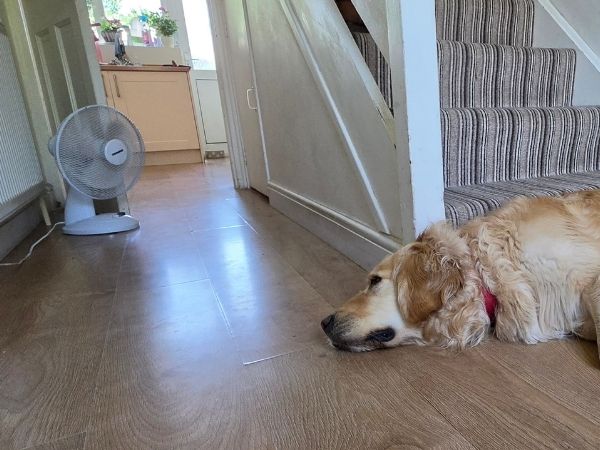
If you share your home with a dog or cat, they need your attention during hot weather too. Pets cannot regulate their temperature the way we can, and a house that feels uncomfortable to you may feel dangerous to them.
Conservatories, upstairs bedrooms, and poorly ventilated rooms can become especially difficult for pets during a heatwave.
We have written a dedicated guide covering everything you need to know about keeping your dog safe and cool in summer.
Read our guide:
How to Keep Your Pets Safe in the Summer Heat
When Passive Cooling Is No Longer Enough
Blinds, fans, and cool showers help you keep your house cool in summer up to a point. During extended heatwaves, however, they often cannot keep indoor temperatures low enough to be safe, particularly in the rooms most prone to overheating. This is the reality the Climate Change Committee’s report is pointing to.
The CCC report specifically identifies the creation of at least one cool room within the home as an important measure for reducing heat-related health risks, particularly for vulnerable households. It also highlights that investing in cooling measures now could significantly reduce future health and economic impacts.
Portable Units vs Proper Air Conditioning
Many people consider a portable air conditioning unit as a first step. They are easy to buy and require no installation, which makes them appealing. However, they come with real drawbacks. Most need a hose vented through a window or door gap, which lets warm air back in at the same time. They can be noisy, they consume a reasonable amount of energy for the cooling they deliver, and they typically struggle to maintain comfortable temperatures in larger or poorly insulated rooms. As a short-term measure they are better than nothing, but they are not a substitute for a proper system.
A professionally installed air conditioning system is quieter, more effective, and far more energy efficient. Installation is typically completed in a day and is much less disruptive than most people expect. Most modern systems also operate as heat too, providing efficient supplementary heating during winter as well as cooling in summer, which means you get year-round value from the investment.
Red Van Plumbers install domestic air conditioning systems across Buckinghamshire, Berkshire, West London and Oxfordshire. We provide honest, straightforward advice on the right solution for your property, with no obligation to proceed. If you want to keep your house cool in summer without relying on fans and open windows, we can help you find the right solution.
Find out more about our air conditioning installation service or call us on 01628 533 550 to arrange a free consultation. You can also request a free quote online at a time that suits you.
Resources
The following sources were used in researching this article. We recommend them as trusted references for further reading.
- UK Health Security Agency: Beat the Heat: Keep Cool at Home Checklist
- NHS: Heat Exhaustion and Heatstroke
- Age UK: Looking After Yourself in a Heatwave
- British Red Cross: Keep Cool at Night During a Heatwave
- British Red Cross: Top Tips for Staying Cool in Hot Weather
- Climate Change Committee: A Well-Adapted UK: The Fourth Independent Assessment of UK Climate Risk
- Red Van Plumbers: Air Conditioning for UK Homes Is No Longer a Luxury